Types of Home Loans

Discover the different loan options available and find the mortgage that makes the most sense for your financial situation

Loan Programs at a Glance

CJ Kerls is a Branch Manager and SVP of Mortgage Lending at Rate, financing homes across the San Francisco Bay Area, Sonoma County, Southern California, and Palm Springs, with 35+ years of lending experience. Four things decide which program fits:

  • Income type matters as much as income size. A salaried paycheck, self-employment income, and vested stock compensation are each documented and calculated under different rules, so the right loan program starts with how you are paid.
  • Loan size sets your tier. The conforming limit is the largest loan Fannie Mae and Freddie Mac will buy in your county. Above it is jumbo financing, and high-cost counties have a high-balance tier in between that changes both your cash and your cost.
  • Occupancy sets your terms. A primary residence, a second home, and an investment property are priced and qualified differently, so decide how you will use the property before you write an offer.
  • Credit score is one piece of the file. Minimum scores differ by program, and strong income, assets, and equity can carry a file that a score alone would not.
30-Year Mortgage
A fixed rate and predictable payment make long-term budgeting straightforward, which matters in the Bay Area's high-cost market. Some first-time buyers pair it with a two-unit property and let rent cover part of the payment.
  • Fixed rate for the life of the loan
  • Lower monthly payment vs. shorter terms
  • Available for primary, second home, and investment
Best for: First-time buyers and those prioritizing payment stability
15-Year Mortgage
Pay off your home in half the time and build equity significantly faster. Typically comes with a lower interest rate than a 30-year, meaning you pay less over the life of the loan.
  • Lower rate than 30-year fixed
  • Equity builds roughly twice as fast
  • Higher monthly payment to plan for
Best for: Move-up buyers and those who want to be mortgage-free sooner
Jumbo Loan
Bay Area specialty
A jumbo loan is any amount above your county's conforming limit. Jumbo lending is one of CJ's core areas of expertise, complex scenarios included. There's also a middle tier in high-cost areas, and high-balance conforming loans can change both your down payment and your cost.
  • Fixed or adjustable rate options
  • Down payment as low as 10.1% on certain programs
  • Credit score floors generally 680 to 700
Best for: Buyers of high-value Bay Area and Wine Country properties
VA Mortgage
Veteran benefit
A powerful benefit earned through military service. VA loans are backed by the Department of Veterans Affairs and offer some of the most competitive terms available, with no down payment required.
  • No down payment required
  • No monthly mortgage insurance
  • One-time VA funding fee applies
Best for: Veterans, active-duty service members, and surviving spouses
FHA Mortgage
Gov't-backed
Backed by the Federal Housing Administration, FHA loans open the door for buyers who may not qualify for conventional financing, with flexible credit and down payment requirements. If family is helping with the down payment, gift funds are allowed too.
  • Down payment as low as 3.5%
  • Credit scores as low as 580 considered
  • Mortgage insurance premium required
Best for: Buyers who need more flexibility to qualify
Non-QM / Bank Statement
CJ specialty
Traditional loans want W-2s and tax returns. That's not how a lot of successful people get paid. Bank statement loans, one type of non-qualified mortgage (non-QM), qualify you on real cash flow instead.
  • 12 to 24 months bank statements used to qualify
  • No W-2s or tax returns generally required
  • Available for self-employed and 1099 earners
Best for: Self-employed borrowers, business owners, and complex-income earners
RSU / Equity Compensation
Bay Area specialty
Restricted stock and other equity compensation can make up a large portion of a Bay Area tech income, and lenders vary widely in how much of it they will count when qualifying for a mortgage. CJ structures these files so vesting history and future vesting are documented the way underwriting needs to see them.
  • RSU and stock grant income considered for qualification
  • Vesting history and remaining vesting schedule both reviewed
  • Frequently paired with jumbo financing on Bay Area purchases
Best for: Tech and biotech employees whose compensation is largely equity
Doctor Loan
Medical professionals
Also called physician mortgage loans, these are built for medical professionals carrying higher than average student loan debt, a new employment contract, and limited savings early in a career. Income, debt, and reserves are read differently than conventional guidelines read them.
  • Student loan debt treated under program-specific guidelines
  • New employment contract can be used before the first paycheck
  • Open to physicians, dentists, veterinarians, and other healthcare providers
Best for: Medical professionals, including residents and those early in their careers
DSCR / Investment Property
Investor program
A DSCR loan, short for debt service coverage ratio, qualifies on the property's rental income rather than your personal income, so tax returns and W-2s stay out of it. Useful once a portfolio grows past what conventional guidelines will count. If the property is a short-term rental, make the cost segregation decision before you lock a loan.
  • Qualifies on the property's rental income, not personal income
  • No tax returns or employment verification generally required
  • Available for single family, multi-unit, and short-term rentals
Best for: Real estate investors and portfolio buyers, including first-time investors
Adjustable-Rate Mortgage
An ARM starts with a fixed rate for an initial period, typically 5, 7, or 10 years, then adjusts periodically. Often the right tool for buyers who plan to sell or refinance before the adjustment kicks in.
  • Lower starting rate vs. 30-year fixed
  • Rate adjusts after initial fixed period
  • Caps limit how much the rate can change
Best for: Buyers with a defined timeline or shorter hold period
HELOC
A Home Equity Line of Credit lets you tap your home's equity as a revolving credit line. Draw what you need, when you need it. Good for ongoing projects, tuition, or consolidating higher-rate debt, as long as you're tapping equity for the right reason.
  • Borrow only what you need
  • Interest paid only on amount drawn
  • Funds available in as few as 5 days
Best for: Homeowners with equity who want flexible access to funds
Refinance
Whether you want to lower your rate, shorten your term, or pull cash out of your equity, a refinance can be a smart move. If you've inherited a California home, check how Prop 19 affects your property taxes first. Either way, CJ will run the numbers to make sure it genuinely makes sense for you.
  • Rate-and-term or cash-out options
  • Can eliminate mortgage insurance
  • Potential to save thousands over loan life
Best for: Homeowners looking to reduce costs or access equity
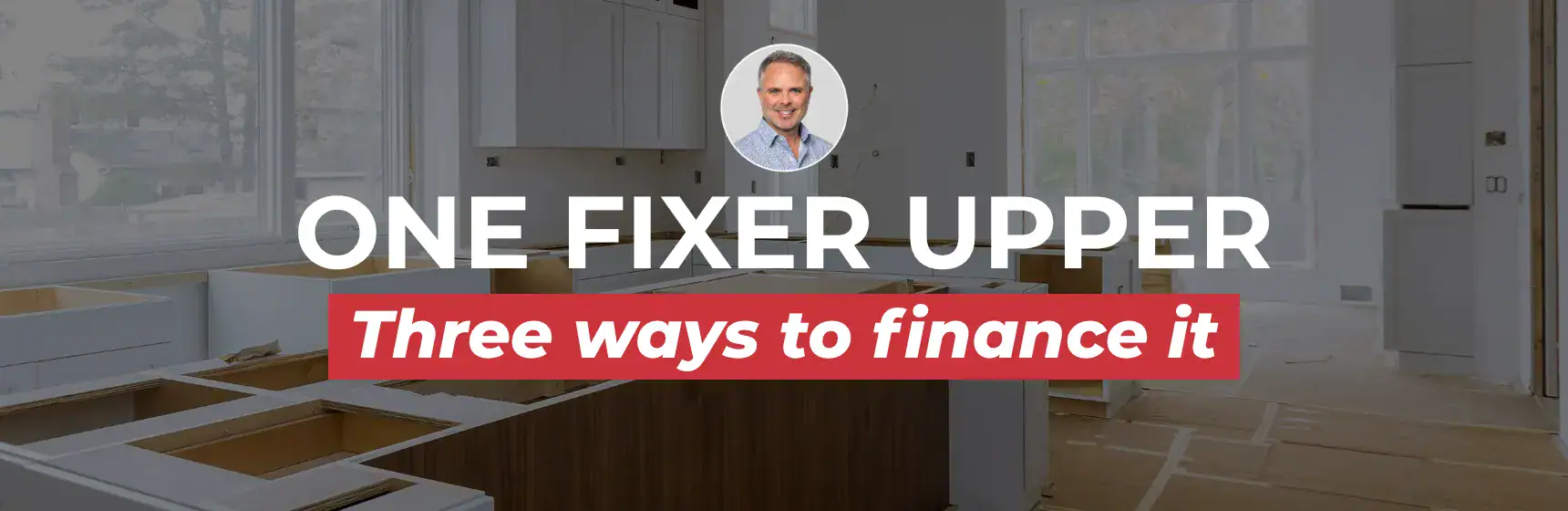
Home Renovation Loan
Finance your purchase and your renovation in a single loan, so you're not juggling a mortgage and a separate construction line. Perfect for fixer-uppers or buyers who want to customize a new home. A renovation HELOC covers the same two paths, the home you already own and the fixer you are buying, and sizes the line on what the home is worth after the work rather than what it is worth today.
  • Purchase price + renovation costs combined
  • One closing, one monthly payment
  • Available for new construction and large-scale improvements
Best for: Fixer-upper buyers and large-scale home improvement projects
ADU Financing
There is more than one way to finance an accessory dwelling unit (ADU), and the right path depends on your equity, your budget, and the mortgage you already have.
  • Five ways to finance an ADU
  • Some paths let you keep your current mortgage
  • Renovation HELOC based on after-renovation value
Best for: Homeowners adding an ADU rental or family space to a property they already own
Bridge Loan
CJ specialty
In a competitive market, an offer that depends on selling your current home first is often the one that loses. A bridge loan draws on the equity in the home you own to fund the next purchase, so you can buy first and sell after. It is one of several ways to buy before you sell, and the right one depends on your equity, cash, and timing.
  • Uses equity in your current home to fund the purchase
  • Lets you write an offer without a sale contingency
  • Short-term loan, typically repaid from the sale
Best for: Homeowners with equity who want to buy their next home before selling
USDA Loan
Gov't-backed
Backed by the U.S. Department of Agriculture, USDA loans make rural and suburban homeownership accessible with no down payment required. Parts of Sonoma County qualify. Ask CJ if your area is eligible.
  • No down payment required
  • Income limits and property location caps apply
  • Home improvement loan and grant options available
Best for: Income-qualified buyers in eligible rural and suburban areas
Reverse Mortgage
Unlike a traditional mortgage, a reverse mortgage pays you, converting your home equity into tax-free income while you remain in your home. Most are FHA-insured Home Equity Conversion Mortgages (HECMs).
  • Must be 62 or older and live in the home
  • No monthly mortgage payment required
  • You remain responsible for taxes, insurance, and upkeep
Best for: Homeowners 62+ who want to convert equity into retirement income

Important disclosures

The loan programs described on this page are provided for informational purposes only and do not constitute a commitment to lend or an offer to extend credit. Down payment, credit score, and other qualifying figures shown are general program guidelines rather than an offer of terms. The figures that apply to your loan depend on the program, the property, and a full review of your application. Program terms and availability are subject to change without notice.